So far, on my blog and in other content I try to publish on social media, I've mainly shared content about the benefits of merino wool in terms of comfort. I've talked about its breathability, non-irritating properties, anti-allergic properties, and much, much more.
Today, however, I'd like to focus on another, more "medical" aspect of this fabric. As you know, awareness of the harmful effects of ultraviolet (UV) radiation on our skin is constantly growing, which is why we're constantly searching for effective protection methods. Excessive exposure to UV radiation is associated with serious consequences, from sunburn and premature skin aging to an increased risk of developing skin cancer. Sun protection is not just about using sunscreen; appropriate clothing plays an equally important role and can be the first line of defense against harmful radiation. And it is in this context that it is worth paying attention to merino wool – a natural material with unique properties that can offer us invaluable protection against UV radiation.
What is merino wool and how is it constructed?
Allow me to briefly recap the basics for those who haven't read the previous posts or are just beginning their adventure with this extraordinary knitwear. Merino wool is a unique fiber that comes from merino sheep, primarily native to the cold regions of New Zealand and Australia. It's prized worldwide for its extraordinary softness, delicacy, and fine fibers. The diameter of merino wool fibers ranges from 11.5 to 24.5 microns, which is significantly lower than that of traditional wool. Thanks to this exceptional thinness, merino wool clothing is incredibly soft to the touch and doesn't cause the unpleasant itching often associated with other types of wool. The itch threshold for human skin is approximately 25 microns, and merino fibers are typically finer than this.
Wool and UV radiation
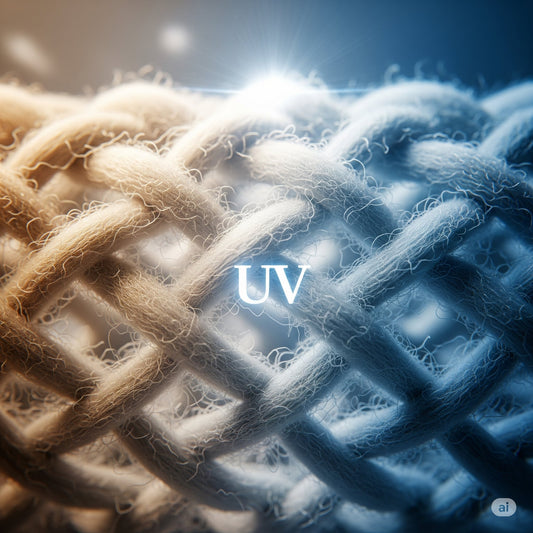
The secret to merino wool's unique properties lies in its complex fiber structure. One key element is crimp , or the natural wavering of the fibers. This wavering creates microscopic air pockets that act as a thermal insulator, providing warmth in cold weather and cooling when temperatures rise. Furthermore, the crimp contributes to the fabric's improved breathability. It's worth noting that the crimp is more intense in finer fibers. This wavering structure may also play a role in UV protection by creating a less direct path for radiation through the fabric, and the trapped air can disperse some UV radiation.
The outer layer of merino wool fiber is covered with scales (cuticle scales) , arranged in a tile-like pattern. This unique structure is partly responsible for the wool's natural water and stain resistance. Like roof tiles, these scales protect against water penetration. This multi-layer barrier created by the scales can increase the likelihood of UV radiation reflection or absorption at each layer.
The inner part of the fiber is the cortex , which consists of two types of cells: the ortho- and para-cortex. The different responses of these cells to moisture contribute to the formation of crimp. The cortex cells are held together by a cell membrane complex (CMC) , which also separates them from the scales. CMC plays an important role in the overall properties of wool, influencing its strength and ability to absorb dyes and chemicals.
Merino wool fibers also contain a matrix composed of sulfur-rich proteins. This matrix is hygroscopic, meaning it can absorb moisture from the environment, including sweat from our skin, as well as moisture from the air. Merino wool can absorb up to 30-35% of its weight in moisture without feeling wet. Sulfur proteins in the matrix also capture odor-causing molecules from sweat, neutralizing them.
Another important structural element of merino wool is the alpha helix , a spiral-shaped structure of keratin protein chains. This structure gives the fibers exceptional elasticity, resilience, and natural wrinkle resistance.
The chemical composition of merino wool also contributes to its unique properties. Wool is composed primarily of proteins (keratin), which contain a variety of amino acids. Some of these amino acids, such as tryptophan, tyrosine, and phenylalanine, are known for their ability to absorb UV radiation . The presence of these specific amino acids, which have UV-absorbing properties, suggests a direct chemical mechanism of UV protection in merino wool, beyond its physical structure alone.
Merino wool and UV protection: what does the research say?
One of the key properties of merino wool is its natural ability to absorb ultraviolet (UV) radiation across the entire spectrum, including both UVA and UVB. This natural UV resistance is due to the unique structure and chemical composition of merino wool fibers, which contain natural pigments that act as a protective barrier.
The level of UV protection a fabric offers is measured by its sun protection factor (UPF) . Most merino wool garments have a UPF rating between 20 and 50+. The UPF indicates how much UV radiation a fabric can transmit. For example, garments with a UPF of 50+ allow less than 2% of harmful UV radiation through. Scientific studies have shown that merino wool offers superior UV protection compared to other natural clothing materials such as cotton, linen, nylon, acrylic, and silk.
One of the key studies in this field is the 2001 study by Gamblicher and colleagues. In this study, the UV protection factor of 236 different fabrics was analyzed. The results were clear: all 100 merino wool fabric samples achieved a UPF above 40. In comparison, most other fabrics tested showed significantly lower UPF values, and, moreover, nearly 80% of the cotton samples achieved a UPF below 20. This study strongly supports the claim that merino wool offers superior UV protection compared to cotton. The fact that 100% of merino samples met the UPF > 30 standard, while the vast majority of cotton samples did not, highlights the significant difference in their inherent protective capabilities.
The high effectiveness of merino wool in blocking UV radiation is also confirmed by other studies, such as the works by Hilfiker from 1996, Reinert from 1997 and Haerri from 2000. The consistency of results across multiple independent research projects reinforces the scientific consensus regarding merino wool's effective UV absorption. This suggests that UV-blocking properties are inherent to this fiber.
Comparison with other popular clothing materials
|
Material |
Typical UPF Range |
UV Protection Compared to Merino Wool |
Other Advantages in the Context of the Sun |
|
Merino wool |
20-50+ |
Better than cotton and linen, comparable or slightly worse than untreated polyester |
Breathability, thermoregulation, moisture management, odor resistance, comfort |
|
Cotton |
5-20 (usually) |
Worse |
Breathable, soft (but loses its properties when wet) |
|
Polyester |
30-50+ |
Often better, especially specialized |
Lightweight, quick-drying, durable (but may be less breathable and prone to odors) |
|
Flax |
Under 30 |
Worse |
Airy (but poor UV protection and easily wrinkled) |
Factors influencing the UV protection of merino wool
Several important factors influence merino wool's ability to block UV radiation. The density of the weave or knit plays a key role. Tightly woven merino wool fabrics offer better UV protection. The less light penetrates a fabric, the more effectively it blocks radiation. Therefore, if you want maximum UV protection, choose tightly woven fabrics.
The thickness of the fibers , measured in microns, can also be a factor. Thinner merino fibers are softer, but thicker fibers can potentially offer slightly more protection due to the material's heavier weight. However, research suggests that even thinner merino fabrics have a high UPF. Although thicker fibers intuitively seem more protective, the fact that even thin merino fabrics exhibit high UPF values suggests that the inherent properties of the merino fiber itself contribute significantly to UV protection, regardless of thickness within the typical range used in apparel.
The color of merino wool significantly impacts its ability to block UV radiation. Unlike lighter colors, which reflect a significant portion of incident light, dark colors absorb it. This means less UV radiation reaches the skin beneath clothing.
In addition to these factors, other factors also influence merino wool's ability to protect against UV rays. The amount of stretch in a material can reduce its UPF. This means that the fit of merino wool clothing is important to maintaining its protective properties. Clothing that is too tight may offer less protection due to stretching of the fibers and the formation of larger gaps between them. Humidity also plays a role. Wet merino wool still protects from the sun, unlike cotton, which loses protection when wet. However, overall, humidity can reduce the fabric's UPF. Although merino retains some protection when wet, the overall decrease in UPF when wet suggests that for optimal UV protection, it is best to keep merino wool clothing dry. However, its advantage over cotton in this regard is significant. The final important factor is the weight of the fabric . Heavier merino wool fabrics typically offer better UV protection. Lighter merino fabrics have a UPF in the 20-30+ range, while heavier ones can reach 50+. This gives a clear indication to consumers: in intense sunlight, choosing heavier merino wool garments will likely provide better UV protection.
Merino wool in sun and outdoor clothing – examples of applications
Due to its unique properties, merino wool is widely used in the production of sun and outdoor clothing. Choosing this multi-purpose material will provide you with head-to-toe protection from harmful radiation. This includes T-shirts, long sleeves, sweatshirts, leggings, and accessories such as multi-functional neck warmers and hats.
Opinions of experts and dermatologists
Experts and dermatologists emphasize the importance of clothing as the first line of defense against harmful solar radiation. Merino wool is often cited as a material providing effective sun protection. Scientific studies show that merino wool absorbs UV radiation more effectively than many other materials, including popular cotton. However, it's important to choose clothing made from tightly woven merino wool in a dark color, which further increases the level of UV protection. Some experts point out that the natural UV protection offered by merino wool is permanent and doesn't wash out, unlike the chemical UV filters used in some synthetic materials.
Summary
This was quite a lengthy post – I admit it – but that's because I wanted to introduce you a little deeper into the world of this extraordinary fabric so you could more consciously and fully enjoy all its benefits. To briefly summarize the extensive information I've included here, remember the most important thing! Merino wool is a unique material that offers natural protection against harmful UV radiation thanks to its unique fiber structure and ability to absorb radiation . Scientific studies confirm that merino wool has a UPF rating ranging from 20 to 50+, making it a better choice than many other natural materials. Factors such as weave density, fiber thickness, and wool color influence the level of UV protection, with darker and denser materials providing a higher degree of protection. Remember, proper care of merino wool clothing is crucial to maintaining its protective properties. In addition to UV protection, merino wool offers a number of other benefits, including breathability, thermoregulation, and odor resistance, making it an ideal choice for sunny days and outdoor activities. So, are you ready for the summer season? :-)